Washing Siding Before an Exterior Repaint: Why It Matters and How It Is Done
Paint holds on to clean surfaces. A wash is the step that decides whether the new coat bonds or peels.
October 14, 2026 · 4 min read
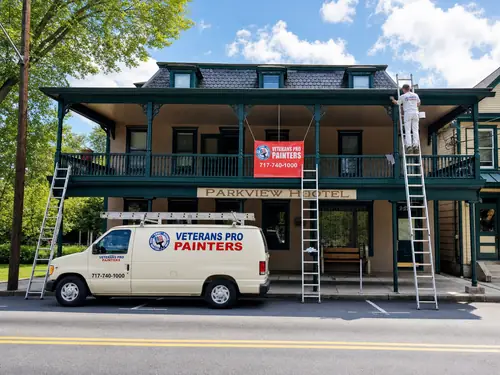
It is tempting to treat the wash as a warm-up before the real work begins. In an exterior repaint, it is part of the real work. New paint can only grip what it is touching, and if that is a film of dirt, mildew or chalky old paint, the grip is weak. The new coat will look great at first, then lift in a couple of seasons.
What is on your siding right now
Three things build up on a house over the years, and each one works against fresh paint in its own way.
- Dirt and grime: road dust, pollen, spider webs and dried-on grit, thickest on the lower walls and under eaves.
- Mildew and algae: green, black or gray growth that thrives on the shaded, damp north side and around downspouts. It is alive, so paint over it and it can keep growing underneath.
- Chalking: old paint breaks down in sunlight and leaves a loose powder on the surface. Rub a dark shirt sleeve across a south or west wall and see if it comes away white.
Chalk is the one people miss. It looks like paint, but it is loose pigment, and a new coat applied over it sticks to the powder instead of the wall. The powder then lets go, taking the new paint with it.
Why adhesion depends on the wash
Paint bonds by wetting the surface and gripping it. Dirt, oils, mildew and chalk all sit between the new film and the siding, and any of them gives the bond a weak layer to fail along. A properly washed wall gives the primer or the first coat a clean base to hold.
This matters even more at the bottom of the wall, where splashback from rain keeps the siding dirty, and on porches and shaded sides where moisture hangs around. Those are the areas where a skipped wash shows up first.
Soft rinse or pressure?
More pressure is not better. High pressure can drive water behind lap siding and into the wall, gouge soft wood, lift edges of paint that were fine, and blast grit into the grain. On older wood siding and trim, it can leave a rough, furry surface that takes extra sanding.
A soft rinse uses lower pressure along with a cleaning solution that does the work of lifting mildew and dirt. The sprayer holds a downward angle, so water runs off the face of each board instead of up under the laps. Hard surfaces like concrete walks, patios and driveways can take more pressure. Painted wood, stucco and older siding should be handled gently.
Windows, doors, light fixtures and outlets should be protected from spray, and plants near the house should be rinsed and covered if the cleaner could harm them. Ask what is being used and how the landscaping will be protected.
Scrape after the wash, not before
Washing also does a useful extra job: it shows you what is failing. Paint that is going to peel often lets go during the wash, or lifts at the edges so it can be scraped. Once the siding is dry, the loose areas get scraped, the edges get sanded smooth, bare wood gets primed, and cracked caulk around windows, trim and corners is cut out and renewed.
Drying time is not optional
Wet siding holds moisture below the surface. Painting too soon traps that moisture, and later it pushes out and forms blisters. How long to wait depends on the weather, the amount of shade and the type of siding. On a warm, breezy, dry day, the face of the siding may look dry within hours, but the wood can take a day or two longer. North walls and shaded porches need more time than south walls.
A simple check is to press a hand on the bare spots and look at the cracks between boards. If the surface feels cool and damp or the wood looks dark, wait. A moisture meter gives a firm answer, and a patient crew will use their judgment rather than the clock.
This is part of why exterior work depends on the forecast. Lethea Myers, a Realtor, thanked Dan for finishing her project "despite horrible heat and so much rain!!" A crew that cleans, dries and then paints will sometimes have to wait on weather, and that is how it should be.
A yearly rinse stretches a paint job
Once the house is painted, an annual gentle wash keeps mildew from taking hold again and keeps the film clean. It also gives you a reason to walk around the house and look for failing caulk or peeling edges while they are small problems.
Power washing is also its own service, for siding, porches and other exterior surfaces. Dan Messimer can look at your house in person and tell you whether the siding needs a soft wash, a full prep or just a touch-up before painting. Estimates are free. Call (717) 740-1000, or send a request through the contact page.
Veterans Pro Painters, (717) 740-1000
Call (717) 740-1000More articles
Repainting an Old Porch: What Gets Scraped, Sanded, Primed and Brushed
A porch is mostly small parts and flat tops, and the prep on those details decides how long the paint stays on.
Painting a House Before You Move In: How to Plan It Room by Room
An empty house is the best time to paint it, if you plan the colors and the calendar before the keys change hands.