Painting a House Before You Move In: How to Plan It Room by Room
An empty house is the best time to paint it, if you plan the colors and the calendar before the keys change hands.
October 14, 2026 · 4 min read
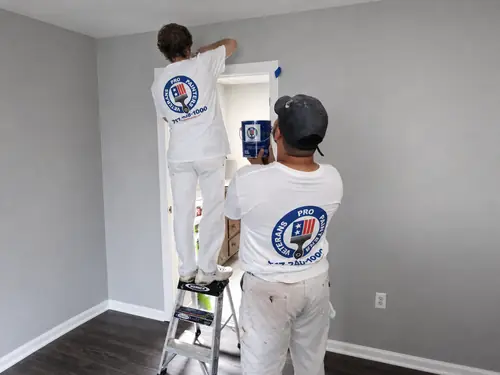
Most people paint around their belongings. They drag sofas to the middle of the room, cover them with plastic, stack boxes in the hall and spend a weekend working around it all. Painting before you move in skips every bit of that. The room is empty, the floors are bare, and the painter can reach every wall, closet and corner without a single obstacle.
It takes some planning, because the window between settlement and moving day is short. Here is how to use it.
Why empty rooms paint better
Furniture is the main thing that slows a painting job down. Every piece has to be moved, covered and put back, and the walls behind it get a rushed cut-in at best. In an empty room the crew can set up ladders anywhere, run a continuous wet edge along a wall and finish with no drips onto things that cannot be wiped clean.
Richard Towne, who bought a home in an East Petersburg active adult community and hired Dan from two hours away in New Jersey, put it this way in his Google review: "I'm a believer in having the interior of a home painted before moving in when possible, which eliminates the need for moving heavy pieces of furniture." He added that this way "the painter can focus on what he does best, paint."
Dust matters too. Sanding and patching throw fine dust into the air, and it settles on everything in the house. Doing that before your things arrive means there is nothing to wipe down afterward.
Settle on colors before the day you get the keys
Color decisions made under pressure are the ones people regret. Do the choosing early and room by room. Take a few swatches home, tape them to the wall and look at them in the morning, at midday and with the lights on at night. A color that looks warm in the store can go flat or turn gray in a north-facing room.
Write the plan down in a simple list: room, wall color, trim color, ceiling color. Towne marked his swatches with the room each one was meant for, then handed them to Dan along with a key. That is a good habit. A painter who is working from a labeled list does not have to guess whether the small bedroom was supposed to be the green or the gray.
- Pick one trim color for the whole house if you can, since it simplifies the job and keeps rooms flowing together.
- Choose sheen by room: flatter on ceilings, a little more durable in kitchens, baths and hallways.
- Decide on closets and ceilings now. They are cheapest to paint while the house is empty.
Two coats, even on a color you like
One coat looks done and often is not. Thin spots show where the roller overlapped, and the old color can ghost through, especially when you go from a dark or strong color to a lighter one. Two coats give you an even finish and a film that wipes clean.
Towne's review noted that the walls got "two coats of paint" and that the job was "neat as can be and there wasn't a drop of spilled paint to be found anywhere." Taylor Newman had a similar moment in another house: she thought the painters were finished because it looked good, until Dan said "No it still needs one more coat." Those moments are what a careful finish looks like in practice.
Timing around settlement and movers
Painting needs a few days of access. Ask your agent or attorney what the earliest date is that you can enter the house with permission, and get that date in writing from whoever controls the schedule. Then count backward from your moving day, leaving a day or two for paint to dry before furniture goes in. Rooms that get heavy traffic, like a kitchen or entry, benefit from extra drying time.
Towne scheduled his around a January settlement. Dan had two weeks to paint about two thousand square feet of walls in seven colors, and according to the review, he finished early. A schedule like that takes a painter who is responsive, and a homeowner who has the colors chosen before anyone arrives.
Sometimes the schedule does not work out so cleanly. Larry Morris had his interior of about 2000 square feet painted in three days, and his review says it happened "while movers were off loading a truck, carpet layers were laying carpet and other folks were trapsing around the house." That can be done, and a good crew will manage it, but it is the harder way. If you can stagger the trades and keep the painter ahead of the movers, everything goes faster and cleaner.
What to do on the first visit
Walk the empty house with the painter before anything is scheduled. Empty rooms show everything: wall damage that a mirror hid, nail holes, scuffs on the trim, and places the previous owners painted over a problem. It is a lot easier to deal with those before the furniture arrives than after.
Linda Roser's review is a good reminder of how much a first look can surface. Her team "pointed out some concerns that we were able to treat." Questions like that are better answered while you can still see every wall.
Dan Messimer offers free in-person estimates, and walking an empty house is the easiest kind. Call (717) 740-1000, or send a request through the contact page before your settlement date is set in stone.
Veterans Pro Painters, (717) 740-1000
Call (717) 740-1000More articles
Repainting an Old Porch: What Gets Scraped, Sanded, Primed and Brushed
A porch is mostly small parts and flat tops, and the prep on those details decides how long the paint stays on.
Drywall Repair Before Paint: Nail Pops, Cracks and Old Patches
New paint does not hide wall damage, it highlights it. The repair is what makes the paint job look good.