Repainting an Old Porch: What Gets Scraped, Sanded, Primed and Brushed
A porch is mostly small parts and flat tops, and the prep on those details decides how long the paint stays on.
October 14, 2026 · 4 min read
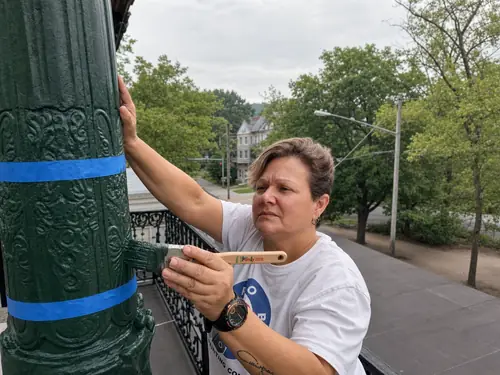
An old porch looks simple from the driveway. Up close it is a pile of awkward surfaces: turned posts, rows of spindle balusters, scroll brackets, a rail cap, a beam, a tongue-and-groove ceiling, and a floor that takes every footstep. Each of them fails in its own way, and most of them fail long before the clapboards behind them do.
If you are planning to repaint a porch in Lancaster County, the useful question is not which color. It is how much of the old finish is still holding on, and what has to happen before new paint goes down.
Why the horizontal tops go first
Rain runs off a vertical post. It sits on a rail cap. The flat top of a railing, the ledge of a bracket, the top of a column base and the porch floor all hold water, then freeze, then thaw. Paint on those surfaces blisters and cracks first, and once the film is open the wood underneath soaks up moisture and pushes the paint off from behind.
That is why a walk around a porch tells you so much. Look at the rail cap and the top of each baluster rail before you look at anything else. If the tops are bare or peeling while the sides still look fine, the rest of the porch is on the same road and just a few seasons behind.
Scraping and sanding, in the right order
Scraping removes whatever is loose. It does not need to take everything to bare wood. A good scrape leaves sound old paint in place and gets rid of anything that lifts under a blade. After that comes sanding, and the point of sanding is to feather the edge where old paint meets bare wood so the new coats do not show a ridge. It also dulls glossy old finish so primer has something to grip.
Spindle balusters are the slow part. There are dozens of them, each with curves that a flat sanding block cannot reach, so the work is done with scrapers shaped for profiles, flexible sanding sponges and patience. Rushing here shows later, because a rough spot under a gloss finish catches the light every afternoon.
Repairs before primer
Soft wood has to be dealt with before any coating goes over it. Probe the bottoms of posts, the ends of rails and the places where trim meets the floor with a screwdriver. Wood that crumbles or lets the tip sink in needs repair or replacement, not paint. Small checks and open joints get filled or caulked so water has fewer ways in.
Then primer goes on every spot that is bare. Primer is the layer that bonds to raw wood and gives the finish coat a stable surface. Skipping it on the bare patches is how you end up with a porch that looks fine for one summer and then shows every scraped spot as a dull, peeling blotch.
The details that take the brush
- Turned posts and columns, where a brush follows the shape and a roller cannot.
- Brackets and scrollwork, where paint pools in the corners unless it is worked out.
- Rail caps, which get the most careful coating because they take the most weather.
- Spindle balusters, painted on all faces and checked for drips along the bottom rail.
Do not forget the ceiling
Porch ceilings get ignored until they start to flake. They live in shade and damp air, which is a good setup for mildew, and they often carry several old coats. Wash them, scrape what is loose, spot-prime, and recoat.
Weather windows in Pennsylvania
Exterior paint wants a dry surface and moderate temperatures. Check the can for its minimum and maximum temperature, and plan around morning dew and the evening drop, since paint that gets wet before it cures can streak or wash off. Late spring and early fall tend to offer the longest stretches of workable days in this part of the state, but a clear week in July can work just as well if the wood is dry.
Weather also shifts schedules. A reviewer named Lethea Myers once thanked Dan for getting her project done "despite horrible heat and so much rain!!" Outdoor work moves around the forecast, and a deadline can still be met.
How many coats, and how long it lasts
On a porch, two finish coats over properly primed wood is the standard worth asking for. The first builds film, and the second evens it out and adds thickness on the surfaces that take weather. A thin single coat over unprepared wood is the reason porches get repainted every other year.
Prep time is also what separates a repaint that holds from one that does not. When the Ephrata VFW had its lettering redone by Veterans Pro Painters, their review said the crew "sanded everything down to ensure the next 2 coats of paint would remain in tack for the next 7-10 years." The principle carries over to any porch: the sanding you cannot see is what makes the paint you can see last.
If your porch has peeling rail caps, soft post bases or a ceiling that flakes when you look at it, Dan Messimer will walk it with you and tell you what it needs. Estimates are free and done in person. Call (717) 740-1000, or send a request through the contact page and he will call you back to set a time.
Veterans Pro Painters, (717) 740-1000
Call (717) 740-1000More articles
Painting a House Before You Move In: How to Plan It Room by Room
An empty house is the best time to paint it, if you plan the colors and the calendar before the keys change hands.
Drywall Repair Before Paint: Nail Pops, Cracks and Old Patches
New paint does not hide wall damage, it highlights it. The repair is what makes the paint job look good.