What goes wrong on a Pennsylvania deck
A deck takes more weather than any other part of the house. Boards face the sky, so sun greys them, rain sits on them and winter freezing and thawing opens the grain. The first signs are always the same: grey, dull boards, rough patches that catch a bare foot, and old stain or paint lifting in flakes along board ends and railing tops.
Once the surface starts to splinter or the finish peels, water has a way in. That is the point where a deck stops being a quick refresh and starts needing real preparation, and it is why the cleaning and sanding matter more than the stain itself.
How the crew cleans, sands and stains
Dan Messimer looks at the deck in person first, at the boards, the rails and the stairs, and tells you what it needs before anything is quoted. Estimates are free, in Lititz and across Lancaster County.
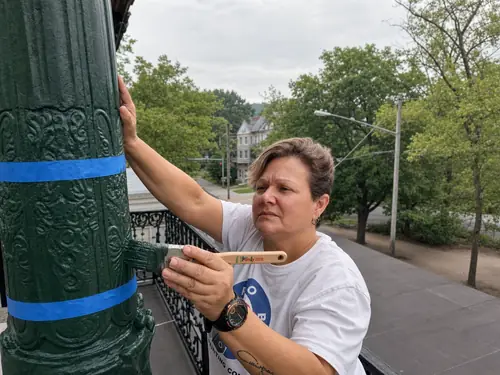
Then the order matters. Clean off dirt, mildew and the old, failing finish. Repair what needs repairing. Sand rough boards smooth. Let the wood dry fully, because stain applied over damp boards will not soak in and will not last. Then stain in the right weather, brushed in and worked along the grain, with the edges taped and cut in the same careful way the crew paints a porch column.
Stain or paint, and when to re-coat
Stain soaks into the wood and wears away slowly, so the next coat is usually a wash and a fresh coat. Paint sits on the surface as a film, and when a film peels on a walking surface the fix is scraping, sanding and starting over. For most decks that people walk on, stain is the easier finish to look after, though a deck that is already painted needs a different plan, and Dan will say which when he sees it.
Re-coat when the boards start to look dry and thirsty, or when water stops beading on them. Decks in full sun and boards at the stair edges wear first, so check those spots each season. If you are not sure whether your deck needs a wash, a re-coat or a full strip, call (717) 740-1000 and get a free estimate.