Drywall Repair Before Paint: Nail Pops, Cracks and Old Patches
New paint does not hide wall damage, it highlights it. The repair is what makes the paint job look good.
October 14, 2026 · 4 min read
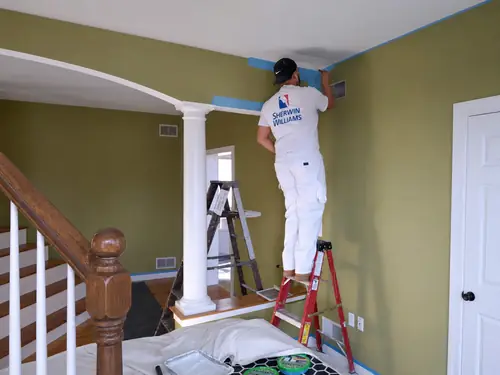
Fresh paint has a way of announcing every flaw in a wall. A nail pop you never noticed under old flat paint becomes a small bump with a shadow. A hairline crack over a door frame shows up as a dark line. A patch someone made years ago, never primed, shows through the new color as a dull square.
That is why wall repair comes before the paint, not after it. It is also why the quality of a painting job is often decided in the part nobody photographs.
Nail pops and screw pops
A nail pop is a small dome that appears when a fastener backs out of the framing underneath and pushes up the joint compound over it. In a house that has been through a few Pennsylvania winters and summers, wood shrinks and swells a little, and drywall fasteners move with it.
Painting over a pop does nothing. The bump stays, and it usually comes back. The right fix is to drive a fresh screw next to the loose fastener so the board is pulled tight against the stud, set it just below the surface, and then fill the dimple with joint compound in thin coats. Each coat gets sanded smooth after it dries.
Cracks, and what they are telling you
Hairline cracks at corners and above doors and windows are common and usually cosmetic. A thin crack gets cleaned out, taped where needed, filled and sanded. Without tape, a crack tends to return along the same line.
Wider cracks, cracks that keep opening, or cracks that come with a stain, a sag or a soft spot deserve a closer look. A wet ceiling stain is not a paint problem. It is a leak that needs to be traced and fixed before anything else, or the repair will fail and the stain will bleed through the new coat.
Bad old patches
Plenty of walls carry the signs of earlier repairs: raised rectangles, ridges around a patch, sanding scratches, or a patch that is a slightly different texture than the wall around it. Those are the repairs that flash through paint. Light from a window rakes across the wall and picks out every edge.
Fixing them means sanding the ridge back, feathering the compound out wider than the original patch, and skimming it so it blends into the surrounding wall. It is slow, meticulous work. One homeowner, Sandy Yeager, wrote in a Google review about a renovation: "Dan did the painting and drywall repairs." The review continues: "Dan is meticulous in his work and we have a flawless end-result." The same customer later had him "fix some previous work we had done by someone else."
Why every patch gets primed
Joint compound is porous and drinks paint at a different rate than painted drywall paper does. If you roll finish paint straight over a patch, the patch absorbs more of it, and the sheen comes out dull and uneven. You see the repair as a flat spot in a glossier wall. That effect has a name, flashing, and it is one of the most common reasons a painted wall looks patchy even though the color is perfect.
A coat of primer seals the compound so it takes the finish at the same rate as everything around it. Primer also helps the repair hold on to the paint, and it blocks stains from coming through. For that reason, drywall repair and painting work best as a single job, with one crew, one plan and one set of materials. When they are split between a drywall contractor and a painter, things often get missed in the handoff.
Repair or replace?
Most wall damage can be repaired. Replace a section of drywall when the board is soft or crumbling, when water has been through it and left it sagging, when a hole is large enough that patching it would mean building a backing from scratch, or when the paper face is torn over a wide area.
- Repair: nail pops, hairline cracks, dents, small holes, old patches that need blending.
- Replace: water-damaged board, large holes, wide torn paper, ceilings that have started to sag.
- Fix the cause first: leaks, plumbing and roof problems come before any wall work.
The call should be made on the wall itself, not from a photo. Press on the area. Look at it in raking light, with a lamp held beside the wall. A good estimator will do exactly that.
What to expect on a repair day
Drywall repair is not a one-visit job, even when it is a small one. Compound has to dry between coats, and sanding has to happen after it is fully dry. A crew that works in thin coats and lets each one cure will send you a wall that is smooth under a raking light. A crew that tries to fill a deep hole in one pass will leave you a shrinking, cracking patch.
Ask how the repairs will be sanded and primed, and ask whether the dust will be contained. Sanding compound makes fine dust, and a crew that covers floors and tapes off doorways keeps your house cleaner. Several reviewers of Veterans Pro Painters mention the cleanup. NanaSue Walker wrote that Dan "cleaned up after himself every night."
If you have a few walls that need to be put right before painting, Dan Messimer will take a look and give you an honest read on what to patch and what to replace. Estimates are free and in person. Call (717) 740-1000, or send a request through the contact page.
Veterans Pro Painters, (717) 740-1000
Call (717) 740-1000More articles
Repainting an Old Porch: What Gets Scraped, Sanded, Primed and Brushed
A porch is mostly small parts and flat tops, and the prep on those details decides how long the paint stays on.
Painting a House Before You Move In: How to Plan It Room by Room
An empty house is the best time to paint it, if you plan the colors and the calendar before the keys change hands.